
What Happens on the Day: What to Expect at a Stud Visit
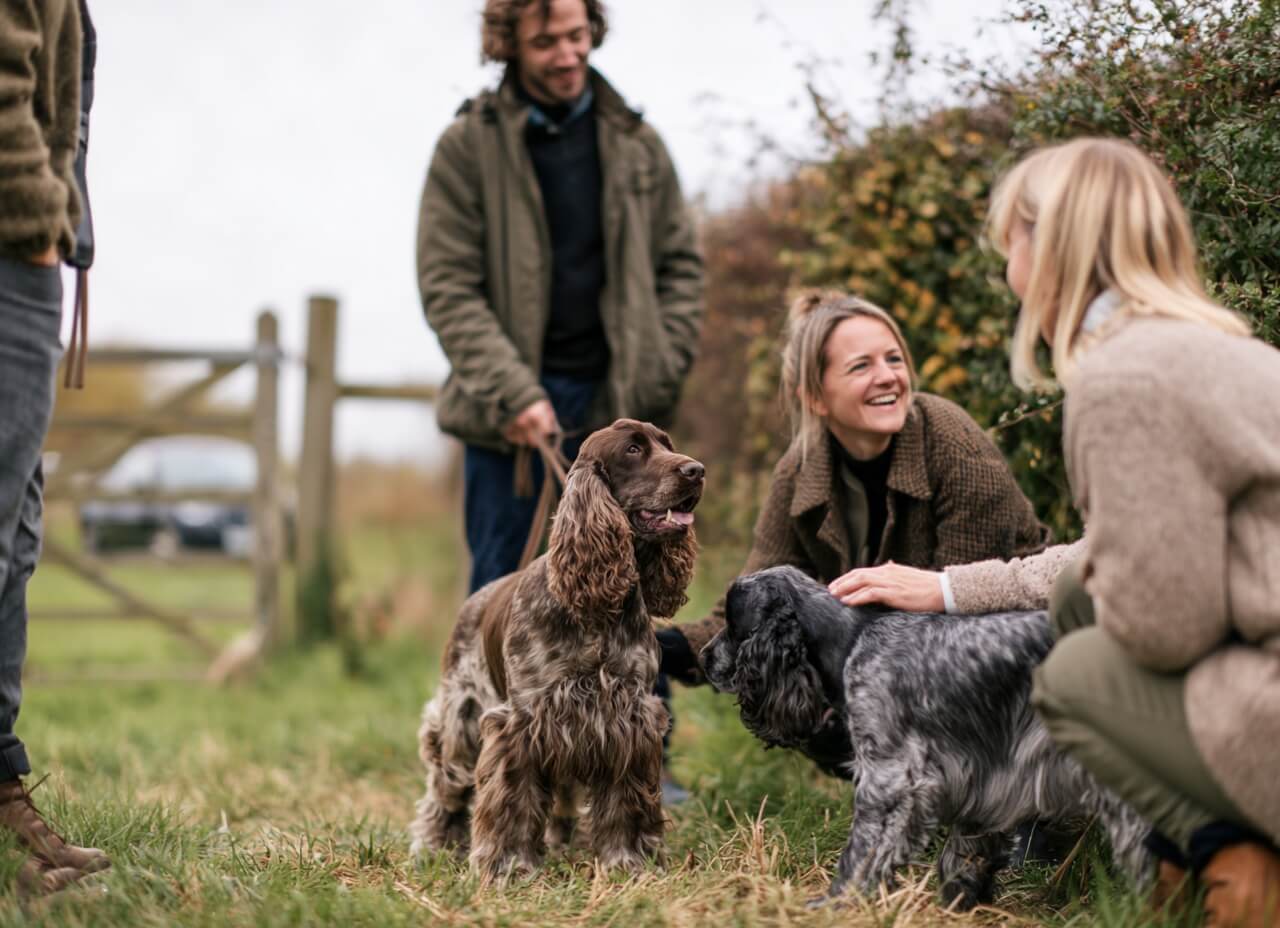
This is the question I get asked more than any other, and the people asking are often nervous about the whole thing. If it is your first time taking a girl to stud, nobody has told you what the day actually looks like.
Whether you are travelling to the stud or the stud is coming to you, it runs much the same. The one difference is that if he has travelled, he will need somewhere to have a wee before anything else happens.
Let them meet and flirt for a while. You will learn a lot from this on its own. If she is ready she should be visibly interested in him, flirty and pleased to see him, and he will be much the same.
Flirting on its own tells you less than people think. A girl early in her season will flirt quite happily with dogs she already knows, because that is social more than anything, and then turn on a stud she has never met and refuse to let him near her. The sign worth watching for is flagging, which is her moving her tail to one side. That is acceptance, and it is much harder to misread than flirting.
As a handler I give them a few minutes and watch how she reacts. If she is flagging and receptive, we go on. If she is not, that tells you something worth knowing before anyone goes any further.
Holding them, and why it matters
This is where handlers differ, and it is the part I feel strongest about. Some will hold the dogs and some will not.
A handler who is not willing to hold is taking a risk with your girl, particularly if she is a maiden. A maiden who panics once they are tied will pull, and pulling is where damage happens. I have had other handlers describe having to retire a stud because he was ruptured during a mating. It healed, but the scarring left him unable to mate, and he ended up neutered.
So hold your dog, and make sure the handler is holding theirs. To anyone who says holding is not right, I am not talking about forcing anything. I am talking about being in a position to stop either dog hurting themselves if one of them panics. It avoids injuries and it avoids vet bills.
The tie
Once he has mounted successfully and they have tied, he will usually throw a leg over and turn, so they end up back to back. That is a more comfortable position for both of them, and for her especially.
A tie can last anywhere from about fifteen minutes to over an hour. My toy poodles typically tie for around fifteen. In all my years handling I have had one go to an hour and twenty-five minutes. There is no normal to worry about inside that range.
One warning. Do not throw water over them. There are posts going round at the moment suggesting you can throw water on the stud to make him release sooner. Do not do it. A tie takes as long as it takes, and trying to rush it is how dogs get hurt.
Afterwards
Once they separate, let them have another flirt and a run about. Some breeders hold the girl's back end up for a minute afterwards. Others do not bother. It is one of those things where you will see both.
Paperwork and payment
This is the point where I go through the paperwork and we sign the stud agreement. Doing it on the day, before anyone leaves, is the whole point of having one: an agreement produced after a disagreement is not an agreement, it is a record of the argument.
It should set out what the fee covers, how many matings are included, what happens if she does not fall pregnant, and what each of you has agreed to do. Both of you should leave with a copy.
If you stand a dog at stud yourself, this is the part StudBase was built for. You write your terms once, and the agreement fills itself in with the booking's details. They sign on your phone and you both have a PDF before anyone has left the yard. See how it works.

Payment is normally due at this point. I take cash or a bank transfer, whichever is easier for you.
The second visit
Then it is a case of booking the next one, and going through it all again. Most stud fees cover two matings, so there is usually a second visit a day or two later.
Scanning her
If you decide to have her scanned, and some handlers require it if you want the free repeat mating, an ultrasound does two useful things.
It tells you whether she is in whelp at all. There is nothing worse than waiting nine weeks hoping, especially with a small litter where she has not put much weight on. Keeping yourself free for the last few days and then having nothing at the end of it is a frustrating way to find out.
It gives you a rough idea of numbers. That matters on the day she whelps, because it tells you roughly when she has finished, or whether there might still be one in there.
If she has caught
Let the handler know. Most of us like to hear that a stud is still producing good litters, and it is a nicer phone call to get than the other one.
A photo of the litter is always welcome too. It gives the handler something recent to show the next person thinking about booking, and nothing sells a stud better than a picture of what he has actually produced.
If she has missed
If the scan shows nothing, let the handler know. I ask people to get in touch between week nine and week ten, which allows seven days in case she caught a litter later than expected.
The free repeat, and getting in early
Not every handler offers a free repeat mating, and the ones who do usually attach conditions, such as having her scanned at around 28 days.
Here is the practical tip. If you are offered one and she comes back into season, get in touch straight away. Leave it to the last minute and the stud may already be booked for someone else that week. Plenty of handlers have that written into their terms for exactly that reason.
One thing worth knowing so there is no surprise: I offer one free mating at her next season, not the two that were originally paid for. That is common.
Keep a vet's number to hand
Problems are not common with most breeds, but some breeds are known for them, so it is worth having a number you can ring rather than looking for one at the time. If you are working with a breed that has a reputation for difficulty, French Bulldogs being the obvious example, that goes double.
The short version
Introductions and a flirt, a mating with both dogs held properly, a tie that takes as long as it takes, paperwork and payment before anyone leaves, a second visit, and a scan at around 28 days. None of it is complicated. It is just that nobody tells you beforehand.
Related guides
Should You Turn Breeders Away? Even on the Day of a Mating?
Would you refuse a stud mating on the day? From a girl arriving covered in fleas to a stud being twice the expected size, I share why sometimes saying no is the most responsible decision.

Should You Offer a Mobile Stud Service? The Pros and Cons
Going mobile widened my reach more than anything else I have done. It has also had me in London at rush hour twice in the same day. Both sides of it, honestly.

Questions to Ask a Stud Owner Before You Book
I am on the other end of these calls most weeks. Here are the questions worth asking, what you are really asking for, and what a good answer sounds like.
Comments (0)