
Should You Turn Breeders Away? Even on the Day of a Mating?
As a stud handler, knowing when to say no is just as important as knowing when to say yes.
Would you turn a breeder away, even if they had travelled a considerable distance, the mating had been arranged, and everything was ready to go?
My answer is yes, absolutely. But it depends entirely on the circumstances.
Over the years, I have turned breeders away for several reasons, particularly when I have had concerns about the condition of their dog or whether my stud was a suitable match for their girl.
It is never an enjoyable decision, especially when someone has made the journey or taken time out of their day. But ultimately, the welfare of both dogs must come before the mating fee.
When a girl arrived covered in fleas
One experience that has always stuck with me involved a lovely chocolate Cocker Spaniel.
She had a fantastic temperament, was incredibly friendly, and seemed perfectly happy. However, there was one very obvious problem.
She was absolutely crawling with fleas.
And I do not mean I spotted one or two. They were clearly visible throughout her coat.
I made the decision there and then that I was not going to allow my stud dog to mate with her.
I explained my reasons to the breeder and offered some advice. An untreated flea infestation is not just uncomfortable for the dog; it can also cause further problems.
Firstly, if the infestation is not properly dealt with, fleas can remain in the dog's environment and become a problem for her puppies once they are born.
Secondly, allowing my stud to come into close contact with an infested dog could introduce fleas into my own household. That potentially means treating all my dogs and their environment outside their usual preventative routine.
As a stud handler, I have a responsibility to protect my own dogs as well as consider the welfare of the girls brought to me.
Turning her away was not personal. It was simply the responsible thing to do.
When the stud dog is too big for the girl
Another situation where I believe handlers need to exercise good judgement is when there is an obvious size mismatch between the stud and the female.
Now, let's be clear. A male being slightly larger than a female of the same breed does not automatically make them an unsuitable match. Size differences are perfectly normal.
However, there is a considerable difference between a slightly larger male and a stud that is clearly oversized for the girl he is expected to mate with.
These days, I am particularly careful about this, and I will not proceed if I believe the size difference presents an unnecessary risk.
My opinion on this comes partly from an experience I had as a breeder myself.
A four-hour round trip for nothing
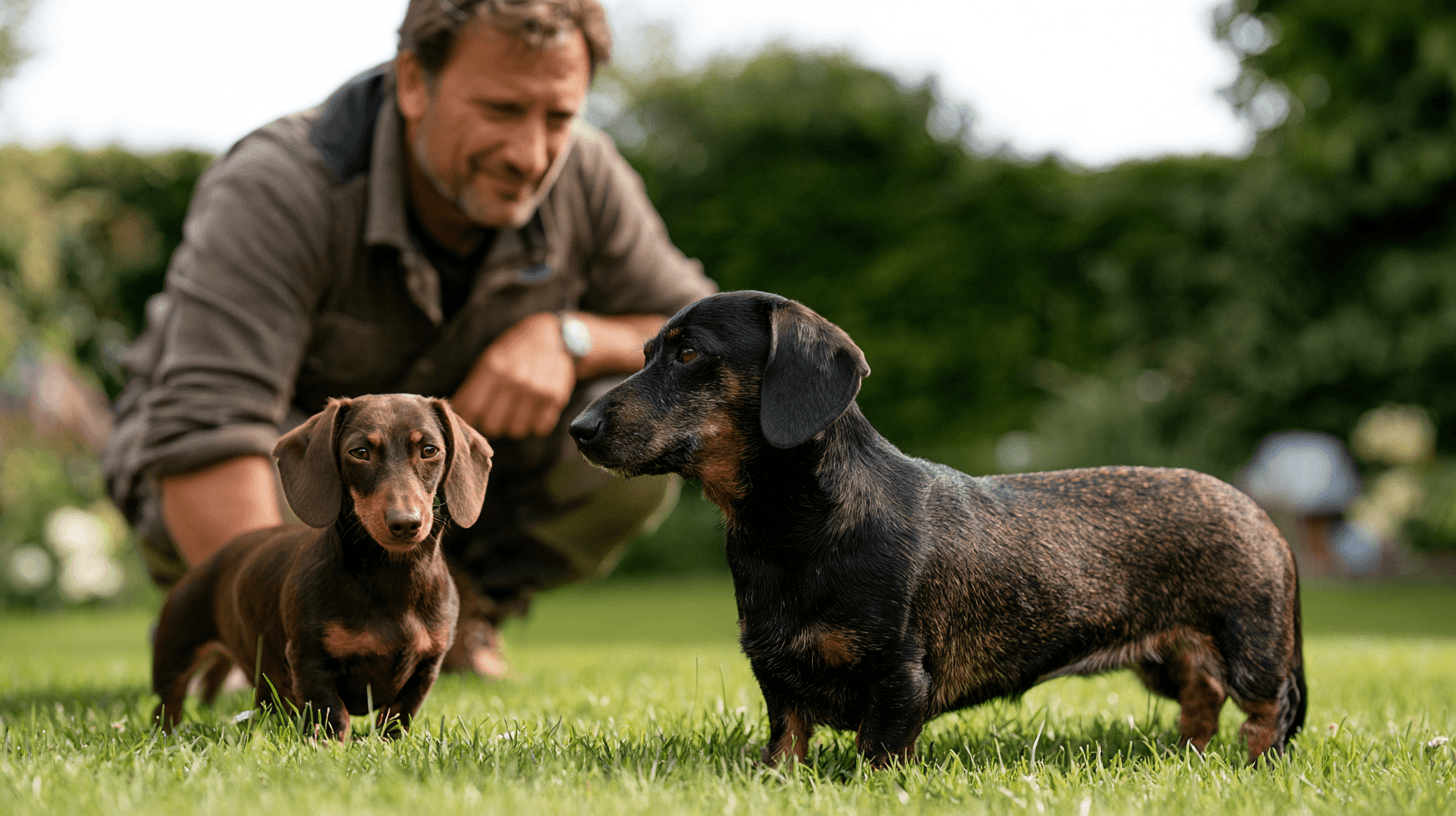
I once arranged a mating for my own Miniature Dachshund girl.
She weighed approximately 5kg, and I had been told the stud dog weighed around 4.4kg. On paper, that sounded like a perfectly reasonable match.
I travelled two hours to meet the stud handler.
However, when I arrived, it became immediately obvious that something was not right.
The stud dog was considerably larger than advertised. In fact, he appeared to be roughly twice the size of my girl.
I knew what a 4.4kg Miniature Dachshund looked like because I owned a stud of that weight myself.
The handler commented on how small my girl was. I explained that she weighed 5kg, exactly as I had stated when arranging the mating.
He then suggested artificial insemination (AI) as an alternative.
But that completely missed the point.
My concern was not simply whether the dogs could physically mate. It was whether they were a suitable breeding match in the first place.
Artificial insemination does not remove the potential risks associated with an unsuitable pairing, particularly concerns about the size of the resulting puppies and possible complications during pregnancy or delivery.
I politely but firmly declined to proceed.
Naturally, I was disappointed. I had spent two hours travelling there and faced another two-hour drive home, all for a mating that should never have been arranged under those circumstances.
I made my concerns clear to the handler before leaving.
But despite the wasted journey, I knew I had made the right decision for my girl.
That experience reinforced something I now consider essential in my own stud service: be honest about your dogs, and never pressure someone into a mating they are uncomfortable with.
A booking is not an obligation
As stud handlers, it is easy to feel committed once a mating has been booked.
Perhaps you have travelled several hours, rearranged your diary, or turned down another enquiry to accommodate the booking.
But none of those things should influence a decision about animal welfare.
If a girl arrives in poor condition, shows signs of illness, has an obvious untreated parasite problem, or simply is not a suitable match for your stud, you should feel completely comfortable declining the mating.
The same applies to breeders choosing a stud. If you arrive and discover something that was not disclosed, or you are unhappy with the proposed pairing, you have every right to walk away.
A responsible stud handler should respect that decision.
Your reputation is worth more than one stud fee
I believe the way you handle difficult situations says a great deal about the service you provide.
Anyone can accept a booking and collect a mating fee.
But being a responsible stud handler sometimes means turning that money away.
You might disappoint someone in the short term, but a breeder who genuinely puts their dog's welfare first should appreciate your honesty, even if they do not agree with your decision.
And if someone is more concerned about completing the mating than addressing a genuine welfare concern, they are probably not someone you want to work with anyway.
My advice? Never be afraid to say no.
Be respectful, explain your reasons, and stand by your decision.
At the end of the day, we are dealing with living animals, not simply providing a service. Their welfare must always come first.
What would you do?
I would be interested to hear from other stud handlers and breeders.
Have you ever turned away a mating on the day, or travelled to a stud only to discover things were not as advertised?
Would you walk away, even after spending hours travelling?
Share your experiences and opinions in the comments. It is an important conversation for anyone involved in responsible dog breeding.
Related guides
Should You Offer a Mobile Stud Service? The Pros and Cons
Going mobile widened my reach more than anything else I have done. It has also had me in London at rush hour twice in the same day. Both sides of it, honestly.
Questions to Ask a Stud Owner Before You Book
I am on the other end of these calls most weeks. Here are the questions worth asking, what you are really asking for, and what a good answer sounds like.
What Happens on the Day: What to Expect at a Stud Visit
The question I get asked more than any other, from people who are often nervous about the whole thing. What the day actually looks like, start to finish.
Comments (0)